









According to the latest TIGTA report, the Inflation Reduction Act (IRA) has funneled significant resources into the Internal Revenue Service (IRS) to strengthen its operations and enforcement efforts.
Recently, the Treasury Inspector General for Tax Administration (TIGTA) report shed light on how these funds are being allocated and used. These details are essential for taxpayers who may be impacted by the growing emphasis on enforcement.
Background: IRS Funding Through the Inflation Reduction Act
In total, the Inflation Reduction Act allocated $7.2 billion to the IRS, with a large portion of these funds specifically earmarked for enforcement purposes. Initially, the IRS set aside $1.48 billion for enforcement activities planned for 2024. However, despite these resources, only 3.4% of the total allocation had been spent as of last year, leaving much of the enforcement funding unused.
Update on 25/12/2025: Under the Inflation Reduction Act of 2022, Congress provided substantial multi‑year supplemental funding to the IRS for compliance, modernization, and operations. Although the agency took time to ramp up enforcement and other programs, as of mid‑2025 several billion dollars in IRA funding, including enforcement dollars, have been spent or obligated toward those goals.
This slow ramp-up has prompted questions about how and when the IRS will fully deploy these resources to enhance tax compliance.
Challenges and Reallocation of Funds
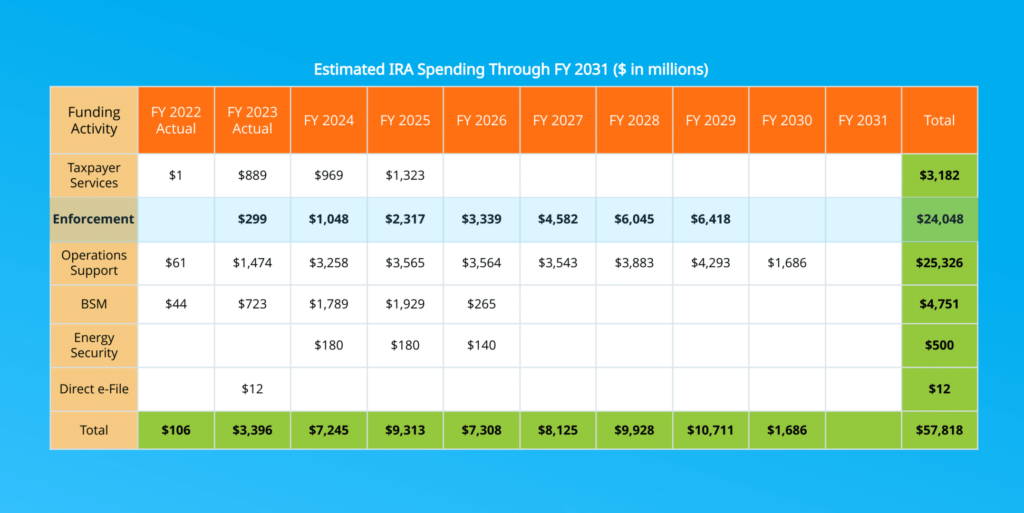
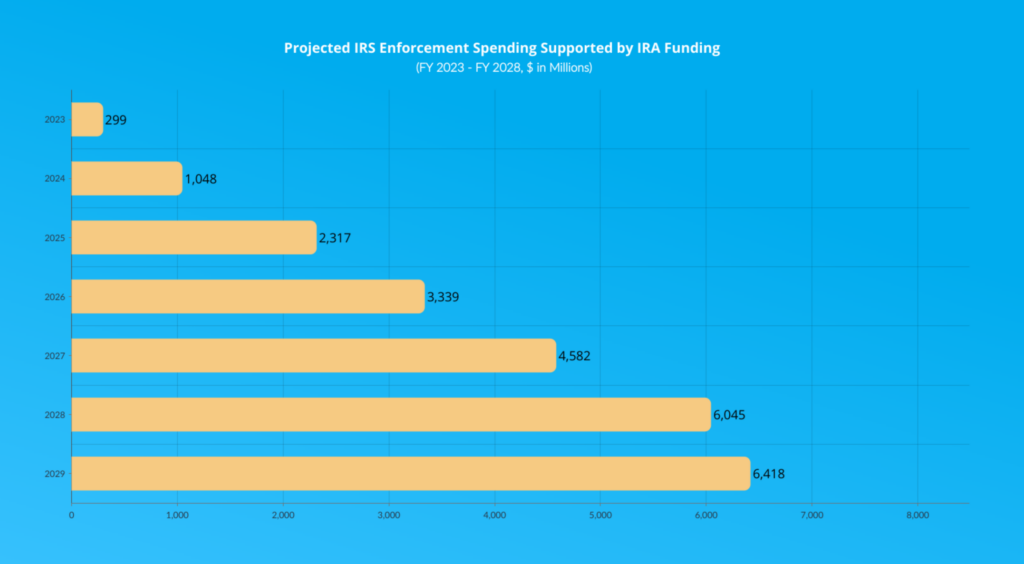
While the initial allocation plan was clear, the IRS has faced evolving challenges that prompted a shift in its spending priorities. Instead of focusing solely on enforcement, the IRS has had to address a variety of budget shortfalls and operational inefficiencies. One key focus has been modernizing outdated technology systems, improving taxpayers outreach, and resolving issues such as long wait times for reaching IRS support via phone. These adjustments have delayed enforcement efforts but are viewed as necessary for building a more resilient and efficient IRS in the long term.
The Shift Towards Enforcement
Despite early delays in deploying new resources, the IRS has emphasized increasing enforcement capacity as part of its FY 2025 priorities. While exact enforcement spending figures vary by source, IRS budget documents reflect a multi‑year effort to improve compliance and enforcement as part of broader modernization and collection goals.
In its FY 2025 budget justification, the IRS requested approximately $104 billion in supplemental funding over a 10‑year budget window to sustain enforcement, modernization, and service activities, projecting that these investments could yield up to $341 billion in additional revenue over time if fully funded. Continued enforcement capacity increases and revenue‑focused activities depend heavily on future appropriations and the availability of both annual and supplemental funds.
The IRS reaffirmed this long-term enforcement strategy in its FY 2026 Budget in Brief, outlining further investments in audits, compliance, and modernization through 2031.
(IRS Publication 5530 – FY 2026 Budget)
How does technology modernization effect enforcement process?
Modernized systems will allow the agency to conduct audits and collections more efficiently by enabling the IRS to process a larger volume of cases with greater accuracy. By upgrading the IRS’s technology infrastructure, the IRS is setting the stage for a more aggressive enforcement strategy, which will include better tracking of tax evasion and quicker resolution of non-compliance issues.
As enforcement spending increases, so too will the IRS’s capacity to pursue non-compliant taxpayers. This will likely lead to more frequent audits, collections, and an enhanced focus on individuals and business that fail to file tax returns. Additionally, the IRS is expected to expand its asset seizure operations, particularly in cases where assets are being transported or hidden to avoid tax obligations.
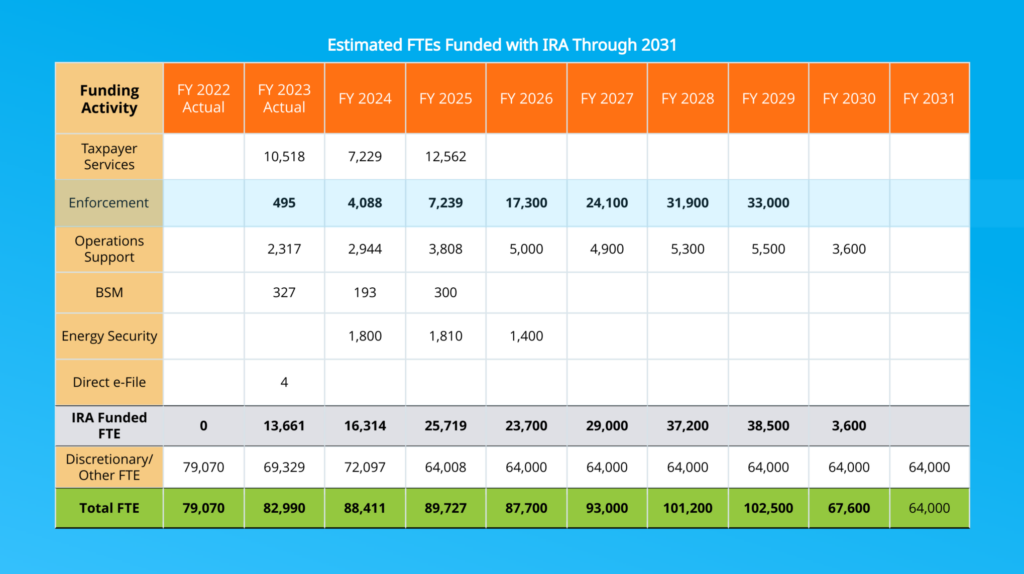
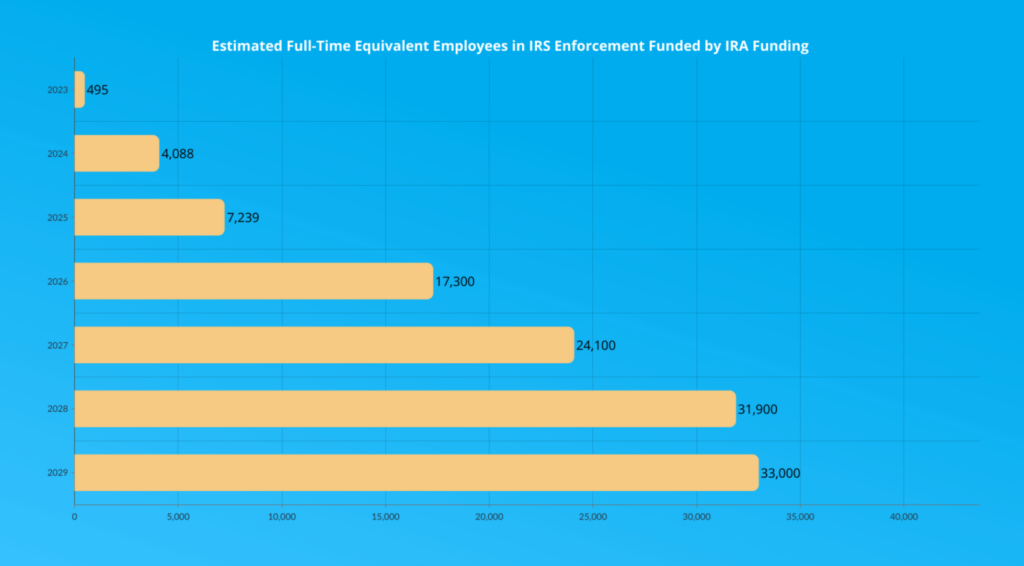
To meet its enforcement goals, the IRS is expanding its workforce. Last year alone, the agency hired 4,088 new employees, and it plans to bring on over 30,000 additional staff members by 2029. This workforce expansion is critical, as a significant portion of the current IRS workforce is nearing retirement. In fact, 18% of employees are eligible for retirement, with 37% expected to become eligible within the next five years. As new employees are trained and brought up to speed, the IRS will be better positioned to meet its enforcement objectives.
What Should Taxpayers Expect? Will There Be a Surge in IRS Audits?
Most notably, audits and collections are likely to become more common, especially for those who are non-compliant with their tax obligations. Additionally, the introduction of a new free e-file system could cause an uptick in incorrect tax returns, further increasing the likelihood of audits.
The IRS’s enforcement efforts are being significantly bolstered by new funding, workforce expansion, and technology modernization. While these changes are expected to increase compliance and revenue collection, they also mean that taxpayers need to be more vigilant than ever. As the IRS ramps up its enforcement activities, understanding these shifts and preparing for the impact will be essential for maintaining compliance and avoiding potential penalties.
If everything seems too complicated, contact us. We’ll help provide a roadmap for tax issues.